- Craig's Current
- Posts
- Craig's Current - December 2025
Craig's Current - December 2025

Craig Cassar
December 19, 2025
The year is winding down, but not without a lot of newsworthy items to share from December. In this issue of Craig’s Current, you’ll find updates on the 2026 budget and the City’s Housing initiatives, news on OLT cases in Ward 12, a detailed look at new positions added by the City since 2022, and much more. I hope you find it informative. And a reminder: please click ‘Read Online’ above to enable navigation links within the newsletter.
Thank you to the friendly folks at Cable 14 for allowing me to record a holiday greeting. However you celebrate, the Ward 12 team wishes you a wonderful holiday season. Merry Christmas, Happy Hanukkah, and Joyous Kwanzaa!

Craig spreading holiday cheer in the community (l to r): Holly Jolly Sidewalk Parade, recording the Cable 14 holiday greeting, A Village Christmas, Volunteering at Good Shepherd’s Christmas Wonderland event, and Downtown Ancaster at the Holly Jolly Sidewalk Parade.

CONTENTS
Remember: Please click ‘Read Online’ above to enable navigation links within the newsletter
COUNCIL NEWS
AROUND WARD 12
COMMUNITY SAFETY
IN OTHER NEWS
HAPPENING AROUND HAMILTON
CLIMATE CORNER

2026 BUDGET UPDATES

On October 7, the Mayor released her "Hold the Line" Tax Budget Directive to Staff, which included the requirement to produce a budget for her consideration that maintained services for Hamiltonians while also minimizing an additional tax burden, limiting the increase to 4.25%. This would exclude budget requests from Boards and Agencies such as Hamilton Police Services, Hamilton Public Library, and Conservation Authorities.
On December 12th , City Staff released their ‘2026 Staff Proposed’ budget to comply with the Mayor’s Directive. It proposes an increase of 4.25% + 1.2% from Boards and Agencies, which are separate budget processes. The additional 1.2% is almost entirely driven by the 2026 Hamilton Police Services Budget, which is a requested 6.81% increase from 2025. Staff's December 12th version of the budget is a draft for Mayor Horwath’s consideration. Her budget will be presented to Council in January. At that time, Councillors will be able to propose amendments for the Mayor to consider.
To refresh your memory, earlier in this term of Council, the Province gave the Mayors of many municipalities ‘Strong Mayor Powers’. One result of that decision is that Hamilton’s Mayor is responsible for the budget, and Hamilton City Councillors no longer have a direct vote on its adoption. We can make recommendations via motions supported by a majority of our colleagues, but the Mayor has the opportunity to veto those decisions. On March 20, 2025, the City of Hamilton unanimously requested that the Premier remove Strong Mayor Powers from Hamilton. To date, that request has not been granted.
There is a second public delegation day for the 2026 budget scheduled for January 19 at 3pm, and I would love to hear from community members. The first delegation day was November 17th , 2025. Instructions on how to request to delegate are here.
Water Budget

On December 10th , Council completed their work on the 2026 Water Budget, and the Mayor has 10 days (until December 20, 2025) to consider if she will veto the amendment made by Council.
The Mayor’s Budget was a 5.82% increase for 2026 water rates, which was a significant reduction from the 10% increase they had projected a year ago. However, a motion from Councillor Tadeson and seconded by Councillor Beattie, will increase the water rates to ~7.3% (25% more). I’ll come back to that shortly.
Hamilton Water has experienced a 4.5% inflation rate for 2026, which means an additional $5.5M to maintain current service levels. (See page 13 here for details.) The remainder of the proposed increase was for capital financing to expand and upgrade our water, wastewater, and stormwater facilities to ensure a healthy and safe city for existing and future residents. To achieve the recommended 5.82% increase, Staff proposed keeping about $30M in ratepayers’ pockets by rescheduling capital projects and avoiding building unnecessary city surpluses for future projects. This decision saves the average residential water user $44 in 2026. The necessary projects will still happen, and there is no impact to safety or future capacity needs.
The budget also contained Council-approved Stormwater funding starting in July 2026. As I have written about previously, this is not new revenue for the City. Our Stormwater infrastructure (both urban and rural) has historically been paid for by municipal water users (i.e. urban residents and businesses), with a much smaller portion paid through everyone’s property taxes. What you pay on your municipal water bill is directly tied to the “wastewater rate”, so the more water you use from your tap, shower, or hose, the more you pay for stormwater. However, that methodology has absolutely no relation to the amount of stormwater that flows into the city’s stormwater sewers in the urban area or its ditches and culverts in rural Hamilton.
Earlier this term, Council approved a new stormwater funding formula that will collect the same amount of total revenue from Hamilton residents and businesses (it’s not a new tax, as some may assert), which is $48.8M (14.7M operating and $34.1M capital) for 2026. However, it rebalances the financial burden from homeowners who generate relatively little stormwater to large businesses or institutions that have large impermeable surfaces (like roofs and parking lots) that have a much bigger impact on our stormwater system. The new funding model would also better align rural funding to the annual spend in that part of the city; rural residents and businesses historically pay roughly a quarter of the ~$8 million of stormwater costs incurred in rural Hamilton.
This brings me back to the motion that will result in a ~7.3% rate increase for 2026, a full 25% higher than the Staff-proposed 5.82% increase. The successful motion supported 10-5 at the December 10th Council meeting delays the new stormwater funding model to January 2027. I did not support the motion. The modernized funding model is essential to ensure stable and predictable funding for our stormwater system throughout the City, and there were no rational reasons put forward for the delay.
Also relevant to this topic, the Province has indicated their intention to prevent municipalities from charging a stormwater fee for agricultural properties (the specifics are not entirely clear). You can read more about the proposed regulation and comment (until December 28, 2025) here. If this regulation comes into effect, the City’s stormwater costs will not be reduced, so the urban users will need to pay more to compensate.
Another notable part of the budget is a requested $210M from the Province to fund the next phase of our Woodward Water Treatment Plant expansion and North Secondary Digester Complex Rehabilitation. If received, this money would further reduce water rates and decrease development charges by $6,800 per housing unit and $4 per sq foot for commercial/industrial development.
In conclusion, the only change Council proposed to the Mayor’s Water budget was the delay of the Stormwater Fee implementation from July 1, 2026, to January 1, 2027, and the Mayor has until December 21st to veto that decision. At the time of writing, that decision remained outstanding.
Budget Vice-Chair
Finally, I am pleased to let you know that the Mayor has selected me as the Vice Chair for the 2026 Budget process. I will be working with Budget Chair, Ward 1 Councillor, Maureen Wilson, to lead the budget process.
CITY OF HAMILTON OPPOSES CONSERVATION AUTHORITY AMALGAMATION

At the December 10th Council meeting, my motion formalizing the City of Hamilton’s opposition to the Province’s intention to consolidate 36 Conservation Authorities (CAs) into just 7 under a new Provincial Conservation Agency was ratified with unanimous support. As the basis for this significant change, the Province has stated its intent to "reduce delays so we can get shovels in the ground sooner" and made several unsubstantiated claims about poor performance, transparency, and insufficient capabilities of CAs, without identifying what level of performance is acceptable.
At its core, my motion calls on the Province of Ontario to maintain the current watershed-based governance model, ensuring local accountability through the powers it already has. Consolidation and the loss of local representation and decision-making are not required. The Environmental Registry of Ontario (ERO) posting is open until December 22, 2025.
Actions you can take regarding amalgamation:
You can submit your comments to the ERO here using HCA’s six “reasons why we’re not supporting the proposed merger” as your talking points here
Send those comments to your MPP as well!
Attend the ‘Save our Conservation Authorities’ Rally in Dundas on Sunday, Dec 21
HAMILTON CONSERVATION AUTHORITY OPPOSES FORCED AMALGAMATION

HCA serves the City of Hamilton and the Township of Puslinch. It manages a 570-square-kilometre watershed, supports about 650,000 people, and cares for 11,744 acres of conservation lands. These natural areas are central to our local recreation, environmental health, and quality of life. HCA also plays a critical role in reviewing development applications, issuing permits, and helping protect people, property, and infrastructure from flooding, erosion, and other natural hazards.
All these actions contribute to a safe and healthy environment for local residents today and for generations to come. That’s why decisions about how our lands are used and cared for need to remain grounded in local priorities. If the Province moves ahead with amalgamation, local funding and decision-making would shift to a much larger regional agency. HCA’s concern is clear: as systems grow, it becomes harder to protect local priorities and ensure local voices remain central to future decisions. Please read more and take action at HCA Corporate Statement and support the HCA by becoming a member
STAFFING LEVELS AT THE CITY OF HAMILTON
Several months ago, Council asked Staff to report back on the new positions added over this term of Council and the current state of vacancies across the City. The report back included a very detailed accounting of not only the new roles added this term of Council, but also the specific reasons they were added and how they are funded. To ensure the public has easy and transparent access to the facts, I will provide a summary of the seven pages of data from the report that details the 814 positions created since 2022. The vast majority of these roles are front-line workers delivering direct services to Hamiltonians. As City Manager, Marnie Cluckie noted, “The City has between 8,000 and 8,500 employees, with roughly 10% at manager-level and above.” Most staff are front-line workers.
FUNDING SOURCES
First of all, a large portion of the jobs at the City (new and pre-existing) are not funded by your property taxes. Many are funded by the Provincial or Federal Government, or fully cost-recovered by user fees. This funding source accounts for 41% of the FTEs added. Upper levels of government funds are provided to the City to run provincial programs like Ontario Works or portions of Public Health Services. Self-funded services include things like building permits or recreation, where user fees are charged. A small number of the new FTEs were funded through savings or transfers from other divisions.

FTEs added by funding source
HOW & WHY HAS THE CITY ADDED FTEs SINCE 2022?
Self-Funded
Self-funded services do not affect property taxes. In this term, 91 self-funded FTEs have been added. For many services, the City follows a partial or full cost-recovery approach. Good examples include our Planning and Building divisions. Fees associated with development applications, etc., often aim to cover the cost of Staff to do the associated work. In the table below, FTEs have been added in these areas to maintain and/or improve service levels. It’s essential to note that Provincial regulations have created additional work for the Planning department, and the timelines for completing this work (required by legislation) have decreased, hence the need for more staff. See the table below.

The top 91 of 115 Self-funded FTEs added since 2022.
Funded by Upper Levels of Government
Positions funded by the Provincial or Federal Governments do not affect property taxes. These positions are generally for services that are provincial or federal responsibility but are administered by the City. This category contains 232 FTEs, but considering that some are only partially funded by another level of government, the net addition is 199 FTE.
Examples are highlighted in the table below. The Long-Term care line addresses the need to service a fast-growing population of seniors and the requirement. You’ll also see the FTEs that enabled Hamilton Paramedic Services to correct the frighteningly poor service levels (386 code zeros in 2022), ensuring an ambulance is available when you need it. I’ll also point out the additional Housing Services employees to manage the housing and homelessness crisis. These FTEs complement those added with tax levy funds. See the table below.

199 FTEs added are funded by the upper levels of government
Funded from the Tax Levy
In addition to just keeping up with a growing population, which requires additional resources, FTEs have been added for other reasons outlined in the table below. 476 FTE (59% of the 814 total) are funded from property taxes (i.e., the ‘tax levy’). This category contains:
Staffing resources for the progression of the 10-year public transit strategy, which has increased transit service levels that required more frontline Hamilton Street Railway (HSR) operators. That’s the top line of 198 FTE in the table below.
I.T. resources for the implementation of the mandatory Next Generation 911 service and bolstering our I.T. network after the cybersecurity incident
Operating impacts of capital across multiple divisions, (as we add assets, we need to maintain them)
Establishment of an asset management team to manage what we now know is a ~$5.2 billion infrastructure spending deficit over the next 10 years
Establishment of an Urban Indigenous team to support the City’s obligations for Truth & Reconciliation
Additional Hamilton Fire resources to maintain their service levels

The top 374 of the new FTEs funded by the tax levy.
FTEs Added: City of Hamilton & Hamilton Police Services
There is one other context in which to consider the 814 FTEs added by the City between 2022 and the present, and that is a comparison to the separate budget process for Hamilton Police Services (HPS). First, I’ll provide some background.
During each budget process this term, HPS has requested additional funding, and with ~95% of the budget related to ‘people’, that means additional FTEs. When an HPS Board-approved budget is presented to City Council, we can only approve or deny it; there is no opportunity to modify it. Each annual budget contained a strong business case as they were fact-based and well thought out, enabling me and the majority of Councillors to support the request. I believe that the majority of residents in Ward 12, and likely across the City, want HPS to fulfill their mandate to uphold community safety.
With all that background laid out, here is the relevant context: based on the numbers shown in HPS budget presentations, their workforce has increased by 115 FTE since 2022. That’s a nearly 10% increase and the same relative increase as the City of Hamilton workforce for the same time period.

The City of Hamilton and HPS have both increased their workforce by nearly 10% since 2022
In conclusion, both HPS and the City must maintain service levels for a growing population and the evolving challenges over the past several years. In that context, both organizations have presented valid business cases for their respective FTE increases. It would be appropriate, then, to evaluate them both consistently based on facts. Individuals may disagree on specific line items, but there is a rationale and purpose for the FTEs added during this term of Council.
HOUSING SECRETARIAT ANNUAL REPORT

Created in 2023 by this term of Council, the City's Housing Secretariat Division embraces a “Whole of Hamilton” approach to identify and facilitate housing solutions that result in safe, affordable, rental and ownership housing for low- and moderate-income residents. Creating and maintaining affordable housing is one of the City of Hamilton’s key priorities and is clearly outlined in the Housing Sustainability & Investment Roadmap (HSIR). Approved by Council in April 2023, the HSIR is an action-oriented framework focused on addressing Hamilton’s housing crisis.
The Roadmap focuses on four pillars of activity:
Construction of new housing
Acquisition of housing at-risk of losing its affordability status
Preservation of existing affordable housing
Increasing the provision of housing-based supports
Every year, the Housing Secretariat presents an update on the goals of the Roadmap. The first report was presented in November 2023, with the most recent update provided earlier this month.
Highlights from the 2025 report:
Between 2024 and 2026: $58.4M invested in 30 projects to create a mix of 2,100 affordable, supportive, and attainable homes. Funded by the supportive housing reserve, our affordable housing account, and the Federal Housing Accelerator Fund.
The Housing Development Project Stream has 37 projects to enable over 2,300 units, plus 7 land requests for additional affordable housing projects
82 new affordable housing units from CityHousing Hamilton.
Approval of the Safe Apartment Building Program.
Implementation of the Rental Housing Protection By-law.
Expansion of the shelter system by 80%.
Approval of the Housing Needs Assessment.
Advancement of transit-oriented housing on municipal lands (630-640 Rymal Rd project).
Read more at item 8.8 of the Nov 12 GIC agenda here
AFFORDABLE HOUSING ACQUISITION PLAN

Council has approved a two-year Affordable Housing Acquisition Plan pilot project that will protect the affordability of the rents by supporting non-profit, charitable, and Indigenous housing providers to acquire private market rental units that are for sale. This project directly addresses pillar 2 (preservation and maintenance of existing affordable housing) of Hamilton’s Housing Sustainability and Investment Roadmap (HSIR) covered in the previous article.
The acquisition pillar aims to create a framework and action plan to enable community housing providers to purchase private rental properties nearing the end of their required affordability term (often 25 years), thereby mitigating the risk of substantial rent increases. This pillar of the Roadmap is particularly critical, as research indicates that for every new affordable rental unit constructed, Hamilton loses 23 affordable units due to rent inflation, significant rent hikes for vacant units, and renovations leading to evictions. From 2011 to 2021, Hamilton saw a reduction of over 16,000 rental units with rent priced below $750 per month.
TRANSITION OF WATER BILLING SERVICES

Beginning April 1, 2026, the City of Hamilton will transition water, wastewater and stormwater utility billing from Alectra Utilities. Alectra has provided water billing services to several municipalities for many years, but has decided to exit this business, requiring Hamilton to transition to another solution.
The newly established Hamilton Utilities Billing (HUB) team will take on water meter reading, billing and customer service on April 1, 2026. Until the transition date, Alectra Utilities will continue to bill and collect payments for water, wastewater and stormwater services.
Over the coming months, both Alectra Utilities and the City of Hamilton will communicate directly with customers to support a seamless transition with minimal disruption and continued high-quality service.
In early December 2025, approximately 55,000 Alectra customers who currently pay through pre-authorized debit will have received an automated telephone call alerting them to expect a letter from the City on how to re-enroll with Hamilton Utilities Billing (HUB) before the transition takes place.
City of Hamilton extends its appreciation to Alectra Utilities for the strong service foundation they have provided and for the continued partnership in delivering critical services to our community. For more information on Hamilton Utilities Billing and the water billing transition, visit www.hamilton.ca/HUB.

COUNCILLOR SPONSORED FREE SKATE

Join me on Friday, January 2, 2026, at Morgan Firestone Arena (385 Jerseyville Rd West) for a free public skate (and free hot chocolate) to ring in the New Year! Everyone is welcome between 2:30 and 4:30 pm. Be sure to show up early, as arena capacity limits will be in effect to ensure everyone’s safety.
CRAIG’S LIST – SUPPORT LOCAL

I hope you are enjoying my video series, Craig’s List – Support Local
Supporting local businesses is always important, but it’s absolutely critical in the current context of tariffs, threats to Canadian sovereignty, and general economic uncertainty. In this series, I profile local businesses on my list so that you can add them to yours.
Check out the most recent Craig’s List videos in the series:
GARNER ROAD CONSTRUCTION UPDATE
The remaining work for this project is around the intersection of Garner Rd E and Springbrook Ave. To reach substantial completion this year (and open each lane for unrestricted travel), Earth Boring will be working 24 hours a day (including weekends) starting Friday, December 19th and continuing into Wednesday, December 24th (no later than 5 pm). If there is still work to be completed after that time, it will recommence on Monday, December 29th. This additional work will be during regular working hours only (7:00 am to 5:00 pm).
FIELDCOTE MUSEUM AND PARK UPDATE

Lots of activity happened at Fieldcote over the summer! Pathways have been widened for better accessibility; some work has been done on invasive species removal, and fresh woodchips were put down to allow for greater enjoyment of the grounds. A Public Tree Inventory has been partially completed as the first step towards creating a new masterplan for the site. This masterplan will include community consultation and will be informed by the intentions of Doris Farmer, who generously donated the land for the enjoyment of future generations. More information coming in 2026.
Fieldcote will also be open for winter walks, hot chocolate, treats, crafts and a holiday gift shop December 23, 24, 27, 28, 31, January 2, 3, 4. Pick up a Winter Wonders scavenger hunt and spend time exploring Fieldcote’s snow-covered grounds before warming up and taking in the exhibit, A Tapestry of Voices, on loan from the Canadian Language Museum.
Coming up in the new year, a new exhibit, Beyond the Blue & White: Wedgewood Designed for Canada, will be on display and will feature over 40 unique artifacts from a collection of over 400 pieces of Canadian-themed Wedgewood. Keith Alyn McLeod (1955-2014) spent his life amassing what is considered one of the most complete collections of Canadian-themed Wedgewood in existence. This exhibit featured McLeod’s collection and explores the growth of Wedgwood and its expansion in North America. Canadian artists employed and inspired by Wedgewood are also featured in this exhibit, including Dundas local George Emery. For more information, visit Hamilton Civic Museums.
ANCASTER COMMUNITY SERVICES – SENIORS' SUPPORTS

Ancaster Community Services (ACS) can help! Do you live in Ancaster or have a loved one there who could use a helping hand? ACS offers a wide range of supports for seniors and individuals in our community who need a little extra assistance. Programs Include:
Meals on Wheels
Frozen Meals
Assisted Volunteer Driving
Shopping 4 Seniors
Food Assistance (Food Bank)
Contact ACS today to learn more or to register for any of their programs. Their team will respond as soon as possible. Call: 905-648-6675 or learn more here.
GLANBROOK COMMUNITY SERVICES - FROZEN MEALS ON WHEELS
Another support available to residents living on the Hamilton Mountain is Glanbrook Community Services (GCS), who are proud to offer Frozen Meals on Wheels. Each meal is $7.50 and includes a main entrée and two healthy sides. Meals are delivered every Thursday, and clients can choose from 35 different entrées, soups, and desserts on a five-week rotation, with options that are low in salt, gluten-free, vegetarian, pureed, and diabetic-friendly. Meals can also be picked up directly from their office (4280 Binbrook Rd., Unit 2) and kept frozen for up to six months.
To make the program as accessible as possible, GCS has simplified the application process and uses the Government of Canada’s Low-Income Cut-Off (LICO) guidelines to determine subsidy eligibility. Orders can be placed online (with an email confirmation) or by phone by Wednesdays at 3:00 p.m. For more information or to order, visit www.glanbrookcommunityservices.ca or call 905-692-3464.
ONTARIO LAND TRIBUNAL (OLT) APPEALS AND SETTLEMENTS

As you are likely aware, there are several development application appeals to the Ontario Land Tribunal (OLT) in process in Ward 12. When a development gets appealed to the OLT, it is removed from the usual municipal decision-making process and transferred to that of the Provincial tribunal, resulting in a more formal and less-accessible process for stakeholders who wish to be engaged. We do our best in the Ward 12 office to track the major cases on my website under the Ontario Land Tribunal tab. Be sure to click on “How to Participate” for more information. Each entry on my website has specific instructions for that appeal. My aim in including OLT appeals and instructions to comment on my website is to demystify the process and empower residents to be engaged through the one mechanism that remains to them after many recent changes by the Province: submitting comments as a “Participant”. We’ll do our best to help you understand how to submit comments for the Tribunal members’ consideration and thereby still have a voice in local decision-making. We’ll also track the outcome of OLT appeals and let you know how the Tribunal ruled on a matter, or if the Parties reached a settlement. If you have questions about the process and how to take part, feel free to email us at [email protected]
442 – 462 WILSON STREET EAST OLT APPEAL

Concept Plan for 442 - 462 Wilson St E
The owner of 442-462 Wilson Street East is appealing a 'non-decision' by the City on the basis that the municipality failed to make a decision within 120 days of receiving a complete application. For clarity, Planning Staff work hard to meet the 120-day deadline; it's not unusual that Staff request reports and studies from developers which are not provided in a timely manner, or Planning Staff and the developer come to an impasse without getting to a proposal that satisfies City policies and the Provincial Planning Statement, and so the 'clock' runs out. This appeal is still in the early stages, and my office will keep the community informed about opportunities to submit comments and participate in the OLT process.
In the meantime, for those who are interested in a deep dive, I've posted a link for anyone to view all the materials and studies submitted by the proponent to Hamilton's Planning Division. Find it on my website under the Ontario Land Tribunal tab here.
OLT Settlements
Often, when an OLT case ends in a settlement, it can be hard to know what was ultimately agreed to because the output of that process is not easy to comprehend. For that reason, I’ve requested that the City’s Legal and Planning teams provide my office with a summary of the settlement in an easily digestible way that I can share with the community. Below are summaries for two recent OLT settlements: Highgate Residence on Fiddlers Green Road, and the industrial development at 370 Garner Road E.
Highgate Residence (Residential Development)

The site plan for 299, 307, and 325 Fiddlers Green Rd., as proposed prior to the OLT settlement.
City Staff had concerns with the massing of the proposed building and its impact on neighbouring properties and loss of mature tree canopy. The developer addressed Staff’s concerns, and Council approved the settlement, which was reached on September 15, 2025. The details involve some reductions to the footprint of the building and greater setbacks (more space from) property lines that will preserve trees. Click here to read more on my website.
370 Garner Road (Industrial development)

The draft plan of subdivision for 370 Garner Rd E, as proposed prior to the OLT settlement.
Staff’s concerns for the application related to the large size of the proposed development blocks and their impact on natural heritage, and the fit with the AEGD’s vision as an eco-industrial park. The developer made changes to reduce the development block sizes, which contributed to maintaining an east-west wildlife corridor on the site. There were also concessions for a 2:1 wetland replacement ratio (double the previous value), and improved tree compensation commitments. Click here to read more on my website.
STREETLIGHTING IN ANCASTER

The new streetlights on Hiawatha Blvd have now been energized. Iroquois Avenue and Cayuga Avenue will make up the final stage of the Mohawk Meadows neighbourhood, with 27 new poles erected as part of Stage #3 of the project. We anticipate that construction will start in the Spring of 2026, subject to materials delivery timeline. Once Stage #3 is implemented, the Mohawk Meadows neighbourhood will be complete, and streetlighting work will continue with the three remaining Ancaster neighbourhoods shown on the map on my website.

2025 HAMILTON COMMUNITY SAFETY SURVEY RESULTS

Like many cities across Canada, Hamilton is facing increasing concerns about crime and safety. These concerns are reflected in media reports on violence and crime, and high numbers of calls for service to the police.
While perceptions of crime and safety may not reflect the realities of risk, these perceptions play an important role in a community's overall well-being.
This year a research team from Wilfrid Laurier University, with funding from the Hamilton Police Service, set out to ask Hamilton residents about their perceptions of, and experiences with, crime and safety in the City of Hamilton. The survey was conducted between January and April of 2025 across the city of Hamilton and resulted in 1245 total respondents. Findings from this report are descriptive and intended to provide an aggregate understanding of crime and perceptions of safety in the City of Hamilton that can act as a starting point for improved strategic planning for community safety. Find the survey results here.

CITY OF HAMILTON’S 50th ARTS AWARDS NOMINATIONS OPEN

The Hamilton Arts Awards are an opportunity to celebrate Hamiltonians for their artistic excellence or community leadership in the arts. 2026 marks the 50th anniversary of the Hamilton Arts Awards – one of the oldest municipal arts awards programs in Canada. The public is invited to nominate outstanding artists and arts community champions for the awards, and nominations will be accepted until Friday, January 16, 2026.
It is now easier than ever for the public to nominate artists in the following three categories:
Creator Awards (Up to nine awards, $2,500 per award) – recognizes excellence amongst artists, arts managers or artistic collectives (including bands) working in any artistic discipline and at any career level.
Arts Champion Awards (Up to four awards, gift of recognition) – acknowledges the essential work of arts sector volunteers, advocates, or board members.
Lifetime Achievement Award (One awarded annually, $2,500) – recognizes those who have contributed substantially to the artistic vitality of the city over the course of a career.
Learn more at CityofHamilton/ArtsAwards
OUTDOOR ACTIVITIES IN HAMILTON
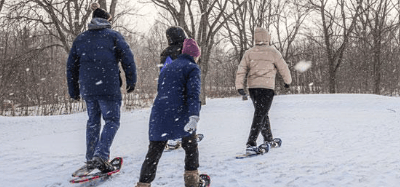
Looking for something active to do outside? Winter Equipment Rentals, Disc Golf, Winter Golf and more are available. Learn more: www.hamilton.ca/outdoorprograms
Check out Hamilton’s Permitted Tobogganing Hills too!
RECREATION PASS BOOKLETS AVAILABLE NOW

“Sleigh the holidays” with swim, gym and skate pass booklets this season. Limited quantities are available for purchase at the Ancaster Rotary Centre. For more information, visit www.hamilton.ca/recpasses
FARE ASSIST PILOT PROGRAM BECOMES PERMANENT

Following a successful pilot phase, the City of Hamilton is making the HSR’s Fare Assist program permanent, effective January 1, 2026. Fare Assist provides a 50% discount on transit fares for residents at or below the Low-Income Measure (LIM).
Fare Assist supports Hamilton’s goals of creating safe and thriving neighbourhoods by making it easier for residents to move around the city and access the resources they need. Affordable, reliable transportation helps people stay connected to employment, education, healthcare and social supports, all of which contribute to community wellbeing and economic growth.
The pilot program, launched in 2024, has proven highly successful in improving access and affordability for Hamiltonians with lower incomes. More than 14,000 residents have been approved since its introduction, and satisfaction remains high at 89%, with participants highlighting the program’s ease of use and the positive impact on their ability to travel across the city. Learn more here
HAMILTON’S LOCOMOTION HISTORY

Take a journey through the history of local railroads at the Escarpment Train Exhibit at the historic Rock Garden at Royal Botanical Gardens! Open on select days. Tickets and video here.
CITY SERVICES HOLIDAY HOURS

All City of Hamilton administrative offices will be closed from December 25, 2025, and will reopen on Friday, January 2, 2026. More details here.

Tourism Hamilton’s Hamilton for the Holidays guide
City of Hamilton’s Holiday Events listing
RBG’s Winter Wonders until Jan 4, 2026
Hamilton Winter Solstice, Dec 21, dusk until 9pm
Christmas Model Train Show, Dec 20-21, Museum of Steam and Technology
Fieldcote Museum Winter Wonders, Dec 23-31 (not 25, 26), 12pm - 4pm
Various events at the Hamilton Public Library – Ancaster Branch, and Lynden Branch

HCA’s CLIMATE ACTION STRATEGY

The Hamilton Conservation Authority is doing its part to help our community and natural environment adapt and increase overall resiliency to climate change. In part, the HCA is also working towards achieving net-zero operations in the future through mitigation actions. HCA’s first Climate Change Strategy was released in 2012 and is a living document that is updated as time goes on. Learn more at HCA Climate Change Strategy.
THANK YOU
Thanks as always to everyone who reaches out to engage with our office. I hope you enjoyed reading this month’s newsletter. Please share it with Ward 12 neighbours and friends. If you have questions, feel free to reach out to us at [email protected] and subscribe to the Ward 12 newsletter at CraigCassar.ca. Follow me on Facebook, Instagram, and Bluesky.